In today’s rapidly evolving world, parents are becoming more conscious about how their child learns, grows, and develops. Understanding what science reveals about early learning is no longer optional – it’s essential. Modern research in Neuroscience has transformed how we perceive learning during the early years, shifting the focus from rote academics to holistic development. The early phase of a child’s life is not just about gaining knowledge; it is about shaping the brain’s architecture for lifelong success.
For decades, the focus remained on what children should learn. Today, experts emphasise how children learn. Studies on Brain Development in Children show that the first five years are crucial, as the brain forms millions of neural connections every second. This makes Early Childhood Development one of the most important stages in a child’s life. From emotional bonding to play-based exploration, every experience contributes to a child’s growth, making Preschool Education a foundation for future learning.
Understanding the Science Behind Early Learning
Research in Neuroscience highlights that young brains are highly adaptable and responsive. Children are not passive learners; they actively build knowledge through experiences, interactions, and emotions. This means that learning environments should be engaging, safe, and nurturing.
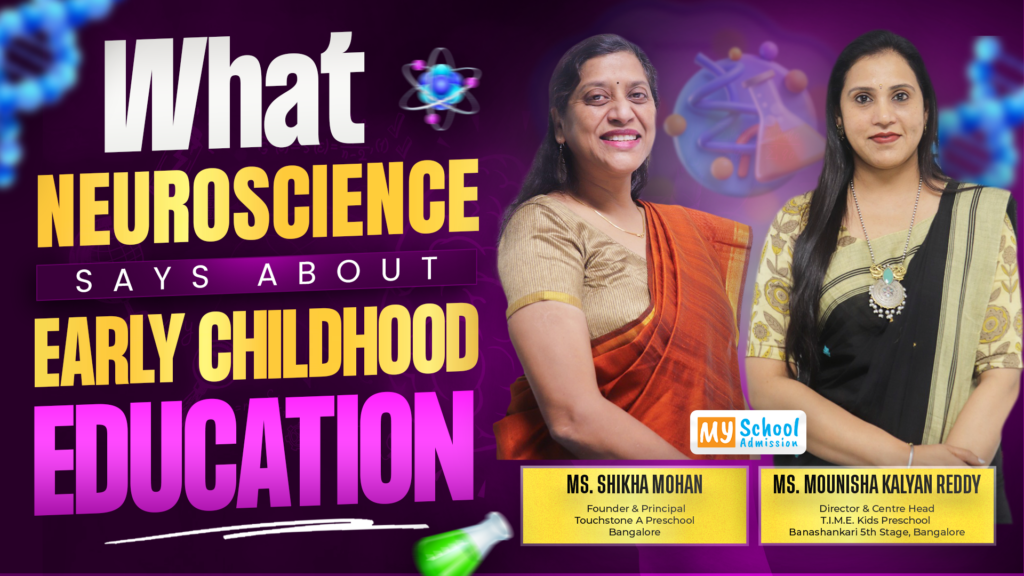
Experts like Ms. Shikha Mohan, Founder & Principal of Touchstone A Preschool, Bangalore, emphasize that learning should not be forced but facilitated through meaningful experiences. Similarly, Ms. Mounisha Kalyan Reddy, Director & Centre Head of T.I.M.E. Kids Preschool, Banashankari, Bangalore, highlights that understanding how the brain works has completely changed how educators approach teaching young children.
When we talk about Brain Development in Children, it’s important to understand that emotional security plays a major role. A child who feels safe and supported is more likely to explore, learn, and grow confidently.
Why the First Five Years Matter the Most
The early years are often referred to as the “golden period” of development. During this time, the brain develops at an extraordinary pace. This is why Early Childhood Education is not just about preparing children for school – it is about preparing them for life.
According to insights from Brain Science in Education , early experiences influence:
- Language development
- Social skills
- Emotional intelligence
- Cognitive abilities
This is where Preschool Education becomes critical. A well-designed preschool environment provides children with opportunities to explore, interact, and build essential skills naturally.
Parents searching for quality Pre Schools in Banashankari often look at infrastructure, but experts suggest focusing more on teaching philosophy, emotional environment, and learning approach.
Want to hear directly from the experts? Watch the panel discussion below to gain deeper insights into early childhood education and brain development.
This video features valuable perspectives from experienced educators, helping parents understand how early learning shapes a child’s future.
Play vs Academics: What Science Recommends
One of the biggest debates in early learning is whether children should focus on play or academics. Research clearly supports play-based learning. According to Brain Growth in Children studies, play enhances creativity, problem-solving, and social interaction.
Ms. Shikha Mohan explains that structured play allows children to learn without pressure. Activities like storytelling, role play, and group interaction stimulate different areas of the brain, making learning more effective.
This is why many Best Pre Schools in Banashankari are now adopting play-based curriculums rather than traditional rote learning methods. The goal is not just to teach children but to help them understand and experience learning.
The Role of Emotional Safety in Learning
A key takeaway from Science of Learning is that emotional safety directly impacts learning. Children who feel anxious or stressed find it harder to focus and retain information.
Ms. Mounisha Kalyan Reddy emphasizes that classrooms should be designed to support emotional well-being. Teachers play a crucial role in creating a positive environment where children feel valued and heard.
When children feel emotionally secure:
- They are more confident
- They engage better in activities
- They develop stronger relationships
This is why choosing the right Preschool Education environment is essential. Parents exploring Top Pre Schools in Banashankari should consider how schools handle emotional development alongside academics.
Common Parenting Mistakes That Affect Brain Development
While schools play a vital role, parents are equally important in shaping a child’s development. Insights from Brain Development in Children reveal that certain common habits can unintentionally hinder growth:
- Excessive screen time
- Lack of meaningful interaction
- Overemphasis on academics
- Limited play opportunities
Early Childhood Education is not confined to classrooms. It extends to homes where parents can encourage curiosity, conversation, and exploration.
Experts suggest simple practices like:
- Talking and reading to your child daily
- Encouraging open-ended play
- Allowing children to ask questions
- Spending quality time together
These small steps can significantly enhance a child’s learning journey.
How Preschools Can Align with Brain-Based Learning
Modern preschools are now integrating insights from Neuroscience into their teaching methods. Schools like T.I.M.E. Kids Preschool in Banashankari are focusing on experiential learning rather than traditional teaching.
some effective strategies include:
- Activity-based learning
- Interactive storytelling
- Sensory play experiences
- Social interaction and teamwork
Such approaches ensure that Pre-Primary Education supports both cognitive and emotional development.
Parents looking for the Top Pre Schools in Banashankari should evaluate whether schools follow these modern, research-backed methods.
Choosing the Right Preschool: What Parents Should Look For
Selecting the right preschool can be overwhelming, especially with so many options available. While infrastructure is important, it should not be the only deciding factor.
When exploring Best Schools in Banashankari, consider:
- Teaching methodology
- Teacher-child interaction
- Focus on emotional development
- Safety and hygiene standards
- Opportunities for play and creativity
Early Childhood Education is about building a strong foundation, not just academic readiness. Schools that align with principles of Brain Growth in Children provide a balanced and nurturing environment.
Parents searching for the Best Pre Schools in Banashankari should prioritize schools that focus on holistic development rather than just academic achievements.
Final Thoughts
Understanding what science reveals about early learning can completely transform how parents approach their child’s education. Insights from Neuroscience clearly show that the early years are critical for shaping a child’s future. Early Childhood Education is not just about learning alphabets and numbers, it is about building emotional strength, curiosity, and confidence. By focusing on Brain Development in Children, both parents and educators can create environments that nurture lifelong learning.
With expert insights from educators like Ms. Shikha Mohan and Ms. Mounisha Kalyan Reddy, it becomes clear that the right approach to Preschool Education can make a lasting impact. Choosing the right preschool, especially among the many options available, is one of the most important decisions parents will make.
We at My School Admission simplify this journey by helping parents discover and compare the Best Preschools based on learning approach, environment, and overall development focus. Whether you are exploring options or ready to enroll, MSA acts as a trusted guide in finding the right start for your child’s future.