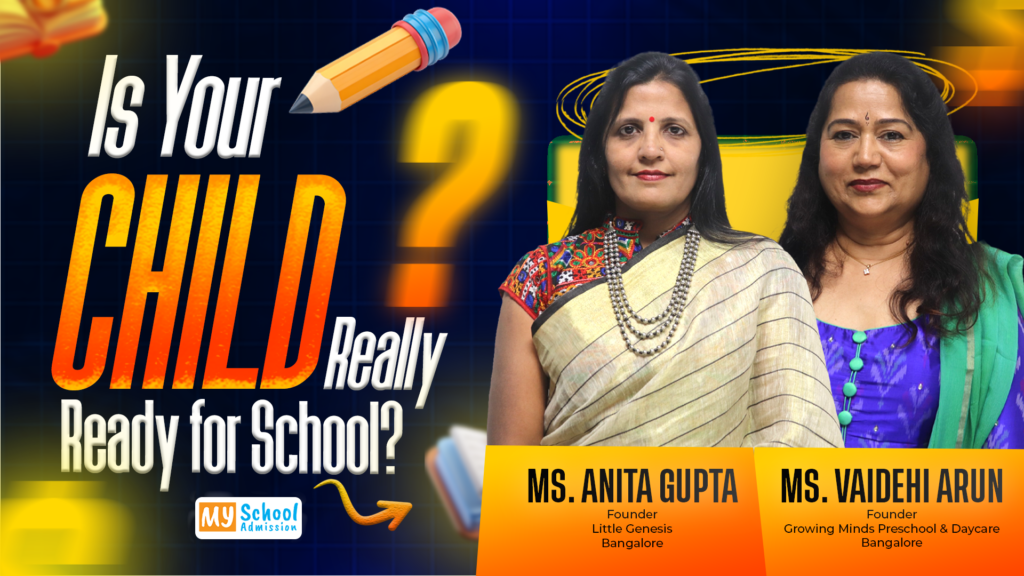
As education continues to evolve to meet changing societal, technological, and developmental needs, the idea of preparing young children for formal schooling is undergoing a significant shift. The panel discussion conducted by EducationToday on ‘School Readiness in 2026: What Preschools Must Do Differently’ brought together two experienced educators- Ms. Vaidehi Arun, Founder of Growing Minds Preschool & Daycare, Bangalore, and Ms. Anita Gupta, Founder of Little Genesis, Bangalore, to understand what Early Education Readiness truly means in today’s world.
For decades, ‘Kindergarten Readiness’ was merely defined by academic preparedness, including recognising letters, counting numbers, and basic writing skills. However, as both panelists highlighted, this definition no longer suffices. In 2026, readiness is more holistic, encompassing emotional resilience, communication skills, independence, and the ability to adapt to new environments.
Watch the video below to gain insights from expert educators on school readiness. It highlights how preschools are adapting to support holistic child development.
Key Takeaways from the Panel Discussion
- Readiness is no longer limited to reading and writing skills
- Emotional and social development plays a crucial role
- Play-based learning remains the foundation of early education
- Every child develops at their own pace
- Parent and school collaboration is essential for holistic growth
Redefining School Readiness Beyond Academics
The discussion began by addressing how the concept of Early Education Readiness has evolved. Ms. Vaidehi Arun pointed out that while academic skills remain relevant, there has been a growing awareness of the importance of social and emotional competencies. Children today are entering classrooms with varied exposures, particularly to digital media, which significantly impacts their attention spans, behaviour, and learning styles.
Ms. Anita Gupta added that preschools must move away from a one-size-fits-all approach. Every child develops at their own pace, and readiness cannot be reduced to a checklist. Instead, it should be viewed as a continuum supported by a thoughtfully designed School Readiness Program that stimulates multiple aspects of development.
Balancing Screens and Real-World Learning
One of the most critical concerns discussed was the increasing influence of digital devices on young children. In an era where screens are deeply embedded in daily life, the challenge lies in finding the right balance.
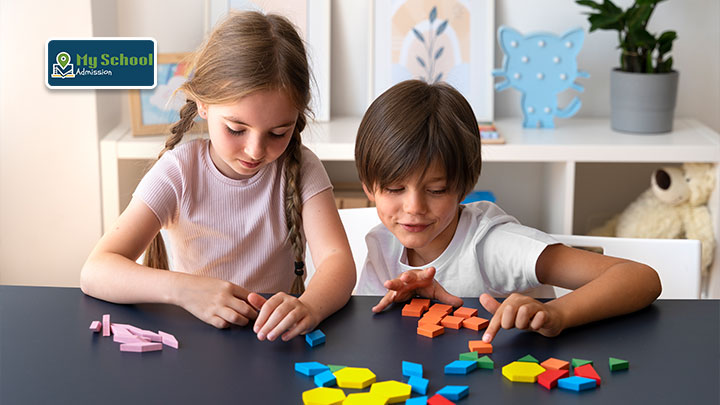
Both educators strongly advocated for Play Based Learning as the foundation of early education. According to Ms. Gupta, structured and unstructured play allow children to explore, experiment, and build critical thinking skills in ways that screens cannot replicate. She emphasised that while technology can be a tool, it should never replace hands-on experiences.
Ms. Arun reinforced this by highlighting the importance of Preschool Activities for Kids that engage the senses, such as storytelling, and how critical thinking can be effectively taught through them. These activities not only enhance cognitive abilities but also foster collaboration and empathy among children.
The Role of Foundational Life Skills
A key takeaway from the discussion was the need to prioritise life skills over rote learning. Independence, communication, self-regulation, and problem-solving were identified as essential competencies that form the backbone of true readiness.
It was explained by the panellists that these skills are deeply rooted in Early Childhood Development, when the brain undergoes rapid growth. The experiences children have during this stage significantly influence their long-term learning and behaviour. Therefore, preschools must create environments that foster curiosity, confidence, and emotional security.
To support this, a well-structured School Readiness Program should integrate daily routines that promote responsibility, such as managing personal belongings, expressing needs clearly, and collaborating with peers.
Bridging the Gap Between Preschool and Primary School
Another aspect discussed was the transition from preschool to formal schooling. Many children experience anxiety during this phase due to mismatched expectations between preschools and primary schools.
The panellists emphasised the need for stronger alignment between the two systems, suggesting regular communication, shared expectations, and curriculum mapping to ensure continuity in learning experiences. When preschools and primary schools work in tandem, children are better equipped to handle the shift.
Additionally, Preschool Education must focus on preparing children for the environment of a primary classroom, not by accelerating academics, but by building adaptability and confidence. This ensures that Preschool Preparedness is not about early achievement, but about a seamless transition and sustained growth.
Engaging Parents as Partners
The role of parents in shaping a child’s readiness cannot be overstated. However, as parenting styles evolve, preschools are faced with the challenge of managing numerous and diverse expectations.
Ms. Arun highlighted that many parents still equate readiness with academic performance, often pushing children towards early learning milestones. This, she noted, can create unnecessary pressure and hinder natural development.
To address this, preschools must actively involve parents through interactive workshops, regular feedback, and open communication. Educating parents about the importance of Play Based Learning and holistic development is crucial in aligning goals.
Ms. Gupta added that consistent instructions at home and school help reinforce positive behaviours and routines. A collaborative approach ensures that children receive the support they need both inside and outside the classroom.
Adapting to Diverse Learning Needs
Understanding inclusivity is of paramount importance. Every child is unique, with diverse learning styles, abilities, and developmental timelines. Therefore, readiness cannot be standardised.
Implementing flexible teaching strategies within Preschool Education is crucial. Educators must be trained to identify the individual needs of their students and adapt their approach accordingly. This includes incorporating different Preschool Activities for Kids that cater to multifarious interests and abilities.
A child who may not excel in structured tasks could thrive in creative or physical activities. Recognising and nurturing these strengths is essential in cultivating confidence and motivation.
A comprehensive School Readiness Program must therefore be inclusive, ensuring that all children, regardless of their pace, feel supported and valued.
The Role of Play in Learning
Throughout the discussion, one theme remained consistent: the power of play. Both educators agreed that Play Based Learning is not just a methodology, but a philosophy that reinforces effective early education.
Through play, children develop language skills, social understanding, and problem-solving abilities. It also enables them to process emotions and build resilience. In this context, Preschool Activities for Kids should be planned to encourage exploration rather than instruction.
The panelists shared instances of how simple activities like group games, storytelling circles, and pretend play can have a profound impact on learning outcomes. These experiences contribute significantly to Early Childhood Development, laying the foundation for lifelong learning.
Rethinking Metrics of Success
The discussion also challenged traditional metrics of success in early education. Standardised assessments and rigorous benchmarks often fail to capture the true essence of readiness.
Instead, educators must adopt more qualitative measures, observing how children interact, express themselves, and respond to challenges. This shift in perspective is critical in redefining Preschool Preparedness for the modern world.
The panel discussion emphasised that success should not be measured by how early a child can read or write, but by how confidently they can navigate new situations. This approach aligns with the broader goals of Playschool Education, which aims to nurture well-rounded individuals.
The Future of School Readiness
As the panel concluded, it became clear that the future of early education lies in adaptability and collaboration. Preschools must continuously evolve to meet the changing needs of children and society.
The integration of holistic practices, inclusive strategies, and strong partnerships with parents and primary schools will be crucial in developing effective learning environments. By prioritising Early Childhood Development and adopting innovative approaches, educators can ensure that children are not just prepared for school, but for life.
School Readiness Skills Every Child Needs
- Ability to communicate needs and thoughts clearly
- Basic social skills like sharing and cooperation
- Emotional regulation and self-control
- Independence in small daily tasks
- Curiosity and willingness to explore
- Ability to follow simple instructions
Tips for Parents to Support Their Child
- Encourage play and hands-on activities
- Maintain a consistent daily routine
- Limit screen time and promote real-world experiences
- Talk and listen to your child regularly
- Support emotional expression and confidence building
How Preschools Can Better Prepare Children
- Create a safe and nurturing environment
- Focus on holistic development rather than academics alone
- Use interactive and play-based teaching methods
- Maintain regular communication with parents
- Support each child’s individual learning pace
Conclusion
The discussion highlighted a powerful shift in how readiness is understood today. It is no longer about early academics alone but about nurturing confident, curious, and emotionally secure individuals who are prepared to adapt and grow. As early education continues to evolve, the focus must remain on balance—between structure and freedom, technology and play, guidance and independence. By embracing a holistic approach, preschools can truly prepare children not just for school, but for life.
At My School Admission, we understand how important this journey is for both parents and children. We are here to help you find the right preschool, explore the best options, and guide you in making informed decisions for your child’s future.