
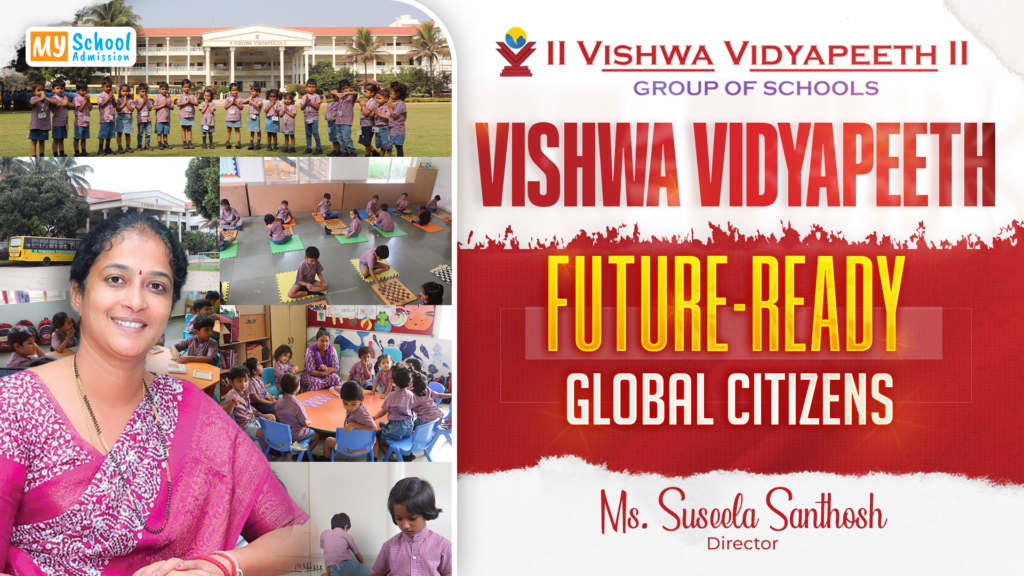
Education today is no longer confined to classrooms, textbooks, and examinations. It has evolved into a system that plays a major role in shaping a child’s personality, thinking ability, and readiness to face real-life situations. With rapid changes in technology, lifestyle, and global expectations, traditional learning methods alone are not enough.
At Vishwa Vidyapeeth Group of Schools, education is approached in a holistic manner. Under the leadership of Ms. Suseela Santosh, the institution focuses on nurturing students who are confident, adaptable, and emotionally strong. The idea is to prepare children not just for academic success, but for life, ensuring they grow into responsible and capable individuals.
A Clear Educational Vision: Beyond Academics
A strong and clear vision is essential for any educational institution to grow and create impact. At Vishwa Vidyapeeth, the focus is not limited to academic performance but extends to building students who can handle real-world challenges with confidence and clarity.
A Clear Educational Vision: Beyond Academics
A strong and clear vision is essential for any educational institution to grow and create impact. At Vishwa Vidyapeeth, the focus is not limited to academic performance but extends to building students who can handle real-world challenges with confidence and clarity.
- Adaptability to Change: In a fast-changing world, students must learn to adapt quickly. This means being open to new ideas, technologies, and environments. Adaptability helps students remain confident even when they face uncertainty or unfamiliar situations.
- Emotional Intelligence: Emotional intelligence is the ability to understand and manage one’s emotions. Students who develop this skill are better at handling stress, building relationships, and making thoughtful decisions in challenging situations.
- Problem-Solving Ability: Instead of relying on memorization, students are encouraged to think critically and solve problems. This helps them become independent thinkers who can analyze situations and come up with practical solutions.
The Journey into Education: A Story of Purpose
The journey of Ms. Suseela Santosh into the education sector reflects how passion can evolve over time. Although she was born into a family of teachers, her initial career path was in nursing and healthcare education.
This diverse experience helped her develop a deeper understanding of care, patience, and empathy. These qualities are extremely important in education, where understanding each child’s needs plays a key role in their development.
How Diverse Experiences Shape Better Educators
- Empathy from Healthcare Background: Working in healthcare teaches patience and compassion. These qualities help educators understand students’ emotional and psychological needs, making learning more effective and supportive.
- Strong Value System from Family: Growing up in a joint family environment emphasizes relationships, respect, and emotional bonding. These values are reflected in the institution’s approach to education.
- Adaptability Across Fields: Transitioning from healthcare to education highlights the importance of continuous learning. It shows that growth is possible when individuals are open to change and new opportunities.
Watch this insightful conversation featuring Ms. Suseela Santosh as she shares her vision on modern education, parenting, and student development. She explains how schools and families together play a crucial role in shaping confident and responsible individuals. Explore the approach followed by Vishwa Vidyapeeth Group of Schools in building future-ready learners.
Challenges and Growth: The Real Beginning
Every successful institution begins with challenges, and Vishwa Vidyapeeth is no exception. Starting in 2012 with just four students, the journey required determination, patience, and consistent effort to build trust and credibility.
Challenges were not seen as failures but as opportunities to learn and grow. Over time, these experiences helped shape the institution’s identity and strengthened its foundation.
Key Lessons from Early Challenges:
- Support Systems Matter: Guidance from experienced educators and institutions played an important role in overcoming initial struggles. Collaboration helped in building confidence and direction.
- Ethical Competition is Healthy: Competition in education is natural, but it should be ethical. Learning from others and supporting each other creates a positive environment for growth.
- Consistency Builds Trust: Trust is built over time through consistent effort and quality. Parents and students begin to believe in an institution when they see reliability and commitment.
Guidance for Young Educators: Building a Strong Foundation
For young educators who want to bring new ideas into the education system, consistency and determination are essential. Success does not happen instantly, and challenges are a part of the journey.
Essential Qualities for Aspiring Educators
- Clarity of Goal: Having a clear objective helps educators stay focused. It allows them to plan effectively and work towards meaningful outcomes.
- Consistency Over Time: Regular effort is more important than occasional hard work. Consistency builds discipline and helps in achieving long-term success.
- Hard Work Leading to Smart Work: Initial stages require dedication and effort. Over time, experience helps in finding smarter and more efficient ways to work.
- Resilience During Difficult Times: Difficult situations help individuals discover their strengths. Facing challenges with determination builds confidence and capability.
Understanding Success: A Journey, Not a Destination
Success should not be seen as a final achievement but as a continuous journey. Focusing only on the end goal can lead to stress and dissatisfaction, while enjoying the process brings fulfillment.
Why Living in the Present Matters:
- Reduces Stress and Anxiety: Constantly worrying about the future can create pressure. Focusing on the present helps in maintaining mental peace and clarity.
- Enhances Productivity: When individuals are fully present, they can concentrate better and perform tasks more effectively.
- Creates Fulfillment: Appreciating small achievements and moments leads to a sense of satisfaction and happiness, which motivates further growth.
Parenting in Modern Times: A Balanced Approach
Parenting today has become more challenging due to changing lifestyles and increased responsibilities. While parents strive to provide the best for their children, they often struggle to maintain a balance between work and family life.
Key Challenges in Modern Parenting:
- Limited Time with Children: Busy schedules reduce the time parents spend with their children. This can affect emotional bonding and understanding.
- Over-Pampering: Providing too many comforts without limits can reduce a child’s sense of responsibility and discipline.
- Confusion Between Friend and Parent Roles: While being friendly is important, children also need guidance and structure. Parents must maintain a balance between the two roles.
The Right Parenting Approach:
- Set Clear Boundaries: Boundaries help children understand limits and develop discipline. They also provide a sense of security.
- Provide Guidance Early: Early childhood is the most important stage for learning values and behavior. Proper guidance during this time shapes future personality.
- Encourage Open Communication: When children feel heard, they are more likely to share their thoughts and concerns, leading to better understanding and support.
Mental Health Awareness: A Growing Necessity
Mental health is an important aspect of overall well-being, but it is often overlooked. Children today face various pressures that can affect their emotional and psychological state.
Understanding Mental Health in Children:
- Emotional Imbalance: Some children may struggle to manage their emotions, which can affect their behavior and learning. Recognizing these signs early is important.
- Impact of Environment: Family situations, peer influence, and school environment all play a role in shaping a child’s mental health.
- Need for Early Intervention: Addressing mental health concerns at an early stage helps prevent them from becoming serious issues in the future.
Role of Schools and Parents:
- Open Communication: Encouraging children to express their feelings helps in identifying problems early and providing support.
- Seeking Professional Help: Counselors and psychologists can guide children and parents in managing emotional challenges effectively.
- Removing Stigma: Mental health should be treated like physical health. Seeking help should be seen as a positive step, not a weakness.
Digital Distractions: A Modern-Day Challenge
Technology has become an essential part of life, but excessive use can negatively impact children’s development. Short-form content and constant screen exposure affect attention span and patience.
Effects of Digital Overexposure:
- Reduced concentration and focus on tasks
- Increased impatience due to instant content consumption
- Difficulty in managing time and responsibilities
How Parents Can Manage It:
- Set clear limits on screen time to maintain balance
- Encourage outdoor activities and creative hobbies
- Monitor the type of content children are exposed to
School and Parent Collaboration: A Shared Responsibility
A child’s development is most effective when schools and parents work together. Education is a shared responsibility that requires cooperation and understanding.
Key Aspects of Collaboration:
- Regular Communication: Keeping parents informed about their child’s progress helps in providing consistent support at home.
- Mutual Responsibility: Instead of blaming each other, schools and parents should work together to solve problems and support the child.
- Consistent Guidance: When values taught at school are reinforced at home, children develop better discipline and understanding.
Education as a Societal Commitment
Education is not just about individual success; it plays a major role in shaping society. Schools are responsible for preparing students to become responsible citizens.
Core Responsibilities of Schools:
- Teaching values, ethics, and discipline
- Developing social awareness and behavior
- Instilling a sense of responsibility towards society
Practice Before Preaching
Children learn more from what they observe than what they are told. Educators must demonstrate the values they teach, as actions have a stronger impact than words.
Preserving Culture in Modern Education
While modern education focuses on global exposure, it is equally important to stay connected to cultural values. Traditions and cultural practices help in shaping a child’s identity and character.
Challenges Faced:
- Influence of social media and external factors
- Lack of supervision due to busy lifestyles
- Changing family structures
The Way Forward:
- Creating awareness among parents and students about cultural values
- Integrating value-based learning into education
- Encouraging participation in cultural activities
Legacy and Long-Term Vision
The goal of education should extend beyond immediate success. It should focus on creating individuals who contribute positively to society and continue the cycle of learning.
At Vishwa Vidyapeeth, the vision is to nurture students who may one day return as leaders and contributors. This ensures continuity in values, growth, and responsibility across generations.
Conclusion
The insights shared by Ms. Suseela Santosh highlight the importance of a balanced and meaningful approach to education, where academic excellence goes hand in hand with emotional and social development. At Vishwa Vidyapeeth Group of Schools, the focus is on shaping responsible, confident, and future-ready individuals through strong values, modern learning methods, and active collaboration between parents and educators. This approach clearly reflects that education is not just about achieving success, but about becoming a better human being. For parents navigating this important decision, platforms like My School Admission add significant value by offering the right guidance, trusted information, and access to quality institutions, making the school selection process easier and more informed while ensuring a strong foundation for a child’s future.