- Rethinking Education: A Holistic Perspective
- What Makes Education Truly Holistic?
- Why This Approach Matters Today
- Breaking Away from Conventional Learning
- 1. Challenges of Traditional Methods
- 2. A Shift Towards Practical Learning
- Preparing Students for a Global Future
- 1. Building Skills for Tomorrow
- 2. Encouraging a Global Mindset
- Integrating Values into Everyday Learning
- 1. The Role of Ethics in Education
- 2. Learning Values Through Experience
- A Student-Focused Learning Environment
- 1. Recognising Individual Potential
- 2. Encouraging Participation and Expression
- The Role of Teachers in Modern Education
- 1. Teachers as Mentors and Guides
- 2. Continuous Learning for Educators
- Integrating Technology in Education
- Building Essential Life Skills
- 1. Why Life Skills Are Essential
- 2. Practical Ways to Build Life Skills
- Creating a Supportive Learning Environment
- Challenges in Modern Education and How to Overcome Them
- Adapting to Rapid Changes
- Key Takeaways:
- Final Thoughts
- Final Thoughts
- Frequently Asked Questions
Are schools today truly equipping children for what lies ahead? In a world shaped by rapid innovation, global connectivity, and constant change, education must evolve beyond traditional boundaries. Academic success alone is no longer enough-students need a broader set of skills and values to succeed in life. This is where a holistic education approach becomes essential for overall holistic development.
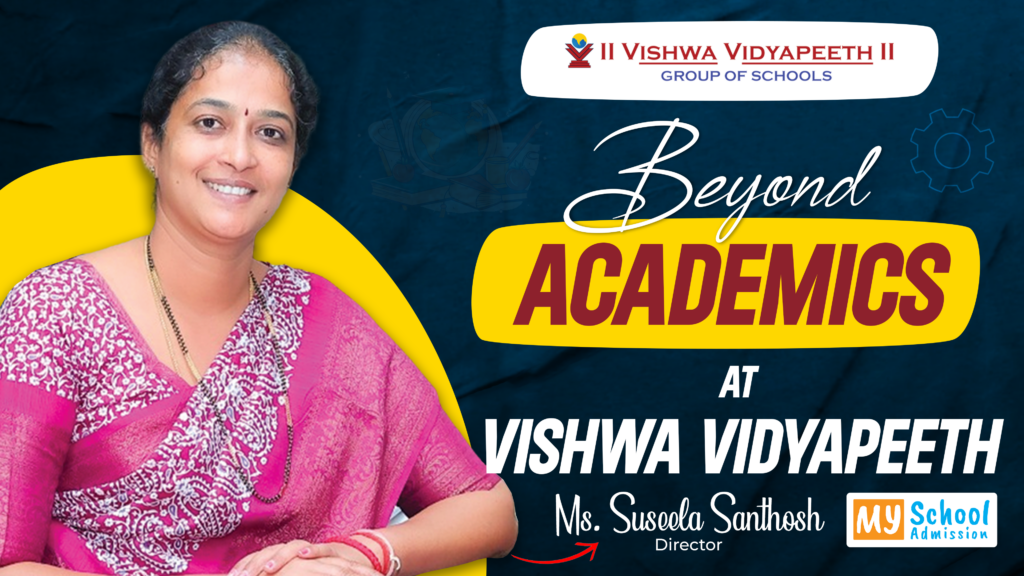
In a thought-provoking discussion with Ms. Suseela Santhosh, Director of Vishwa Vidyapeeth Group of Schools, key ideas around modern learning, student development, and future readiness were explored. This article presents those insights in a refined and structured way to help parents and educators better understand the changing face of education.
Rethinking Education: A Holistic Perspective
What Makes Education Truly Holistic?
Holistic education focuses on shaping the complete personality of a child rather than limiting learning to textbooks. It integrates intellectual growth with emotional stability, social awareness, and ethical understanding. The aim is to develop individuals who are capable, confident, and conscious of their responsibilities, ensuring long-term holistic development.
Why This Approach Matters Today
The demands of the modern world require more than theoretical knowledge. Students must be prepared to face uncertainty, make decisions, and adapt to different situations. A well-rounded education builds resilience and encourages independent thinking.
Students benefit by developing:
- Emotional awareness for better relationships
- Critical thinking for real-life challenges
- Confidence in communication
- Strong moral values for decision-making
Breaking Away from Conventional Learning
1. Challenges of Traditional Methods
Conventional education often emphasizes rote learning and exam performance. While this may deliver short-term results, it does not always promote deep understanding or creativity. Students may struggle to apply their knowledge in real-world situations.
2. A Shift Towards Practical Learning
Modern classrooms are increasingly adopting activity-based and experiential learning techniques. These methods focus on participation and engagement, making lessons more relatable and effective.
Students are encouraged to:
- Explore concepts through real-life applications
- Participate in interactive sessions
- Work collaboratively with peers
- Ask questions and think independently
Preparing Students for a Global Future
1. Building Skills for Tomorrow
As industries evolve, the skills required for success are also changing. Schools must prepare students to think critically, adapt quickly, and approach problems creatively. These abilities help them stay relevant in a competitive environment and enable them to grow into future-ready global citizens, supporting continuous holistic development.
2. Encouraging a Global Mindset
Exposure to diverse cultures and perspectives helps students develop openness and respect. It also enhances their ability to work in diverse environments and understand global challenges.
Schools contribute by:
- Promoting inclusivity and cultural awareness
- Encouraging teamwork across backgrounds
- Developing a broader worldview
Integrating Values into Everyday Learning
1. The Role of Ethics in Education
True education goes beyond academics by shaping character. Values such as honesty, empathy, and responsibility guide students in their personal and social lives.
2. Learning Values Through Experience
Instead of teaching values as separate lessons, they are incorporated into daily school activities. This helps students naturally adopt and practice them.
At Vishwa Vidyapeeth Group of Schools, this is actively implemented through culturally rich programmes and themed learning experiences. Every year, the school conducts large-scale events similar to annual celebrations, where students from different grades participate in theme-based learning.
For instance:
- In Ganitha Mela, students explored mathematics through both traditional concepts like ancient Indian mathematical knowledge (such as Baudhayana’s principles) and modern theories like Pythagoras, helping them connect heritage with contemporary learning.
- In Bharatiya Kala Vibhava, students experienced India’s cultural diversity by learning history and social studies through visual and experiential formats, exploring traditions from across the country.
- Themes like “Jai Jawan Jai Kisan” helped students understand the importance of farmers and soldiers, connecting them with real-life societal roles.
This can be achieved through:
- Classroom discussions
- Real-life examples
- Teacher-student interactions
- School culture and environment
A Student-Focused Learning Environment
1. Recognising Individual Potential
Each student learns differently, and Education must adapt to these differences. Personalised teaching approaches help students perform better and feel more confident.
2. Encouraging Participation and Expression
Modern classrooms prioritise engagement. When students actively participate, they develop better understanding and communication skills.
This includes:
- Interactive teaching methods
- Group discussions and projects
- Opportunities for self-expression
- Encouraging questions and curiosity
The Role of Teachers in Modern Education
1. Teachers as Mentors and Guides
Teachers today play a much broader role beyond delivering lessons. They guide, motivate, and support students in both academic and personal growth, contributing significantly to students’ holistic development. A strong mentor-student relationship creates a positive and encouraging learning environment.
2. Continuous Learning for Educators
With changing educational trends, teachers must continuously upgrade their knowledge and skills. Learning new teaching strategies and understanding student behaviour is essential. This helps them stay effective and relevant in modern classrooms.
This includes:
- Adopting new teaching methods
- Using technology effectively
- Understanding student psychology
Integrating Technology in Education
- Enhancing Learning Through Digital Tools
Technology has transformed the way students access and interact with information. Digital tools make learning more engaging through visuals, simulations, and interactive content. They also provide access to a wide range of global resources.
- Balancing Technology and Human Interaction
While technology offers many advantages, human interaction remains equally important. Personal guidance, emotional support, and real conversations cannot be replaced by digital tools. A balanced approach ensures effective and meaningful learning.
Building Essential Life Skills
1. Why Life Skills Are Essential
Life skills are necessary for handling everyday challenges and responsibilities. They help students communicate effectively, manage time, and make informed decisions. These skills play a crucial role in both personal and professional success.
2. Practical Ways to Build Life Skills
Schools can create opportunities for students to develop life skills through practical experiences. Activities beyond academics help students learn teamwork, leadership, and responsibility. This prepares them for real-world situations.
In addition, initiatives like learning traditional art forms every year such as Madhubani art and Lippan art help students connect with Indian culture while also developing creativity and fine motor skills. These experiences blend cultural awareness with skill development in a meaningful way.
This can be done through:
- Extracurricular activities
- Team-based projects
- Leadership opportunities
- Real-world problem-solving tasks
Creating a Supportive Learning Environment
- Importance of a Positive School Culture
A positive environment helps students feel safe, valued, and motivated to learn. It encourages open communication and mutual respect among students and teachers. Such an atmosphere supports both academic success and emotional well-being.
- Parent-School Partnership
A child’s development improves when parents and schools work together. Regular communication helps track progress and address challenges early. This partnership ensures consistent support for the student’s growth.
Challenges in Modern Education and How to Overcome Them
Adapting to Rapid Changes
- Adapting to Rapid Changes
The education system is constantly evolving with new technologies and methodologies. Schools must be flexible and open to adopting innovative practices. This helps them stay relevant and effective in a changing world.
- Maintaining Balance
Balancing academics, activities, and personal growth can be challenging for students. A well-planned structure helps manage time and reduce stress. It ensures that students develop in all areas without feeling overwhelmed.
Key Takeaways:
- Education should focus on overall development, not just academic performance
- Learning must prepare students for real-world challenges and future careers
- Strong values and ethics are essential for personal growth
- Teaching methods should evolve to suit changing needs
- Technology should support learning while maintaining human connection
- Life skills are equally important as academic knowledge
Want to hear these insights directly from the source? Watch the full conversation to understand the practical approach, real examples, and detailed perspectives shared. The video below gives a deeper look into the ideas and discussions highlighted in this blog.
Final Thoughts
Final Thoughts
The insights shared highlight that education is evolving to meet the needs of a dynamic world. In an environment that demands adaptability, creativity, and emotional intelligence, schools must go beyond traditional education methods.
Holistic education is no longer an option; it is a necessity. By focusing on the overall development of students, fostering values, and embracing innovative learning approaches, schools can truly prepare children for the future.
For parents, the takeaway is clear: choosing the right school is not just about academic results but about finding an institution that nurtures the child as a whole. Platforms like My School Admission can support this journey by helping families explore and choose schools that align with holistic learning values. And for educators, the message is equally important—teaching is not just about imparting knowledge but about shaping lives. As we move forward, the goal should be to create learning environments that inspire curiosity, encourage growth, and build responsible global citizens. Only then can education fulfil its true purpose.