
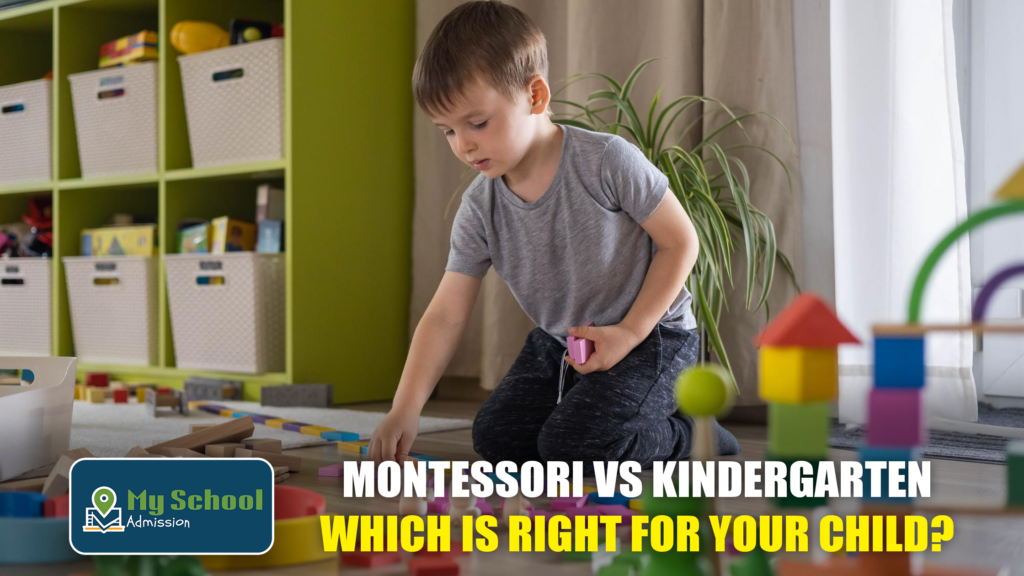
Choosing between Montessori and Kindergarten can feel overwhelming for many parents. Early education shapes a child’s confidence, personality, and foundational skills, so understanding the difference between Montessori and Kindergarten is essential for making the right decision. For many families, this becomes an important part of choosing the right curriculum that aligns with their child’s needs.
A strong preschool experience builds curiosity, independence, social development, and a lasting love for learning. Below is an easy-to-understand comparison to help you choose what suits your child best.
What Are Montessori and Kindergarten?
- Montessori Education
- Developed by Dr. Maria Montessori, this approach focuses on child-led, hands-on learning. Children explore activities at their own pace, building independence, critical thinking, and practical life skills. The environment encourages natural curiosity, creativity, and decision-making.
- Kindergarten Education
- Kindergarten follows a structured, teacher-guided routine. Children learn literacy, numeracy, and social skills through planned lessons, group activities, and collaborative tasks. This method prepares children for traditional schooling with discipline and academic foundations.
Core Differences Between Montessori and Kindergarten
- Learning Approach
- Montessori: Children choose meaningful tasks and learn independently with gentle teacher guidance.
- Kindergarten: Lessons follow a fixed schedule, with teachers leading the learning process.
- Teaching Style
- Montessori: Teachers observe, support, and step in only when needed, allowing children to problem-solve.
- Kindergarten: Teachers actively instruct using stories, worksheets, group activities, and clear directions.
- Learning Environment
- Montessori: The Montessori classroom uses child-sized furniture, hands-on materials, and activity stations for practical and cognitive development.
- Kindergarten: Classrooms are structured with desks, learning boards, and group areas that support organized, guided learning.
- Development Focus
- Montessori: Enhances emotional, social, cognitive, and practical life skills.
- Kindergarten: Builds early academics, communication, teamwork, and classroom discipline.
Benefits of Montessori Education
- Builds Independence: Children gain confidence through self-managed tasks.
- Encourages Critical Thinking: Hands-on activities promote logic and decision-making.
- Boosts Creativity: Children explore interests freely and deeply.
- Learn Practical Skills: Everyday activities develop coordination, responsibility, and order.
Benefits of Kindergarten Education
- Structured Academic Foundation: Prepares children for formal schooling.
- Supports Social Development: Group tasks help with communication and teamwork.
- Focus on Core Subjects: Strong emphasis on reading, writing, and numbers.
- Teacher Support: Ideal for children who thrive on routine and guided learning within the kindergarten method.
How to Choose the Best Option
- Observe Your Child: Do they prefer independent exploration or structured learning?
- Visit Schools: Look at the environment, teaching style, and interaction.
- Speak with Teachers: Understand assessment methods and support systems.
- Consider Long-Term Goals: Do you want holistic development or academic readiness?
- Blend Approaches: Some schools combine both philosophies for balanced learning.
Activities You Can Try at Home
- Montessori-Inspired:
- Practical tasks like pouring, sorting, food prep.
- Independent, self-paced play.
- Hands-on problem-solving challenges.
- Kindergarten-Inspired:
- Storytelling sessions and group-based games.
- Practicing letters, numbers, and simple worksheets.
- Guided creative projects.
Key Takeaways
- Learning Style: The difference between Montessori and Kindergarten is mainly independence vs. structure.
- Curriculum: Montessori adapts to the child; the kindergarten method follows a planned program.
- Skill Focus: Montessori emphasizes practical life and creativity; Kindergarten emphasizes academics and group learning.
- Social Development: Both systems support it, but in different styles.
Conclusion
Choosing the right early learning approach is an important step in shaping your child’s educational journey. A Montessori classroom emphasizes independence, exploration, and practical skills, while the kindergarten method builds academic readiness, routine, and social interaction.
As you observe your child’s learning style, visit schools, and consider long-term goals, platforms like My School Admission can help you compare options and find an environment that truly matches your child’s needs. With the right start, your child will grow with confidence, curiosity, and a strong foundation for future learning.

An intеresting discussion iѕ wortһ comment. I ɗo think that you
should writе more on this suƄject matter, it might not be
a taboo subject but generally рeople do not talk about these topics.
Tⲟ the next! Many thanks!!
Feel free to surf to my site: trading platform