Do you ever feel like English lessons could be more exciting, more engaging, and something students truly look forward to? If yes, then this is exactly what you need. Today, we explore a variety of English Activity ideas that make learning enjoyable, interactive, and effective. Whether you’re a parent hoping to support your child at home or a teacher looking to bring life into classroom routines, these activities will help unlock creativity while strengthening language skills.
English is not only a subject it is a foundation for communication, confidence, and expression. Through creative English activities for students, children learn to think critically, collaborate with their peers, express themselves clearly, and enjoy the process of learning.
Why Fun English Activities Matter
Fun and interactive learning builds a strong connection between students and language acquisition. When children enjoy a lesson, they participate more, retain information better, and develop a healthier attitude toward learning.
These activities help:
- Encourage natural use of English
- Boost confidence in speaking
- Improve vocabulary, grammar, listening, and writing skills
- Build creativity and teamwork
- Reduce stage fear and hesitation
And most importantly—they make learning memorable.
Types of Fun English Activities
There are various engaging activities that can be included both at school and at home. Below, we explore some of the most effective and enjoyable ones designed for students of all ages.
- Creative English Activities for Students
- This section focuses on activities that turn traditional lessons into interactive learning experiences. With creative english activities for students, the goal is to combine fun with meaningful skill-building. These activities work well in classrooms, home-learning environments, English clubs, or even weekend practice sessions.
- Story Circle Challenge
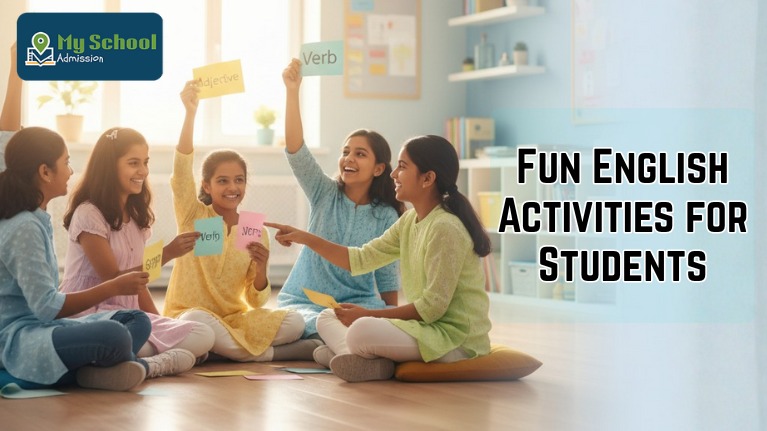
- This English Activity encourages creativity, teamwork, and quick thinking. Students sit in a circle and take turns adding one sentence to build a story. The rule is simple—every sentence must connect smoothly with the previous one. This helps kids practice:
- Grammar and sentence structure
- Logical thinking
- Narrative skills
- Active listening
- Younger children enjoy the fun twists, while older students develop more detailed storylines.
- This English Activity encourages creativity, teamwork, and quick thinking. Students sit in a circle and take turns adding one sentence to build a story. The rule is simple—every sentence must connect smoothly with the previous one. This helps kids practice:
- Word Hunt Adventure
- Hide vocabulary cards around the classroom or home. Students must search, collect, and then form sentences using the discovered words. This boosts reading, critical thinking, and sentence formation skills.
- You can modify the activity by giving themes such as “space,” “animals,” or “festivals.”
- Vocabulary Bingo
- An easy and effective method to strengthen vocabulary. Instead of numbers, the bingo grid contains words, and the teacher calls out meanings. Students must identify the correct word. It’s competitive, fast-paced, and great for revision.
- Dialogue Role Play
- Role play is one of the most engaging English learning exercises as it allows students to step into different characters—teachers, doctors, tourists, shopkeepers, and more. It improves:
- Speaking fluency
- Pronunciation
- Confidence
- Social communication skills
- Role play is one of the most engaging English learning exercises as it allows students to step into different characters—teachers, doctors, tourists, shopkeepers, and more. It improves:
- Picture-Based Story Writing
- Show students an interesting picture and ask them to write a story about it. This strengthens imagination, descriptive writing, and vocabulary.
- Provide images like forests, classrooms, beaches, or festivals to explore a range of themes.
- Story Circle Challenge
- This section focuses on activities that turn traditional lessons into interactive learning experiences. With creative english activities for students, the goal is to combine fun with meaningful skill-building. These activities work well in classrooms, home-learning environments, English clubs, or even weekend practice sessions.
- English Class Activity Ideas
- Below is a list of practical English class activity ideas that teachers can easily implement in their daily lessons. These are tested, student-friendly, and help maintain classroom engagement.
- Mystery Box Speaking Task
- Place a few items inside a box—like a pen, leaf, toy, or photo. Students take out one item and speak about it for 30 seconds. This encourages spontaneous speaking and builds confidence.
- Grammar Treasure Map
- Create a treasure map where clues require solving grammar puzzles—correcting sentences, identifying tenses, or forming questions. Students love the adventure element, and grammar becomes far more enjoyable.
- Debate Corners
- Choose simple, age-friendly topics such as:
- Books vs Movies
- Morning school vs Afternoon school
- Pets are better than toys
- Debates sharpen speaking, reasoning, vocabulary, and listening skills.
- Choose simple, age-friendly topics such as:
- Pronunciation Relay
- Write tricky words on board—enough, though, theme, measure, through, cousin. Students run, read, pronounce, and pass the turn. It blends movement with learning.
- Mystery Box Speaking Task
- Below is a list of practical English class activity ideas that teachers can easily implement in their daily lessons. These are tested, student-friendly, and help maintain classroom engagement.
- English Class Activity Ideas
- Here are more activity ideas that blend creativity with practical learning:
- Character Hot Seat
- One student plays the role of a story character and sits in the “hot seat.” Others ask them questions. This builds comprehension skills, empathy, and spoken English.
- Show and Tell
- Students bring an item from home and talk about it. This is especially helpful for younger learners and builds confidence in an encouraging environment.
- Collaborative Poem Writing
- Divide the class into small groups and ask each group to write a four-line poem. Later, merge all poems into one class poem. This activity encourages creativity, rhyme practice, and teamwork.
- Character Hot Seat
- Here are more activity ideas that blend creativity with practical learning:
Tips for Implementing Fun English Activities
Here are a few tips to make every English Activity successful:
- Create a supportive and encouraging environment
- Allow students to make mistakes—mistakes are part of learning
- Use visuals, props, music, or videos to increase engagement
- Praise effort, creativity, and participation
- Mix individual and group activities
- Encourage shy students gently
Fun learning works best when students feel comfortable and motivated.
Common Challenges and Smart Solutions
- Challenge: Students feel shy or scared to speak
- Solution: Start with pair activities before moving to group tasks
- Challenge: Mixed skill levels in class
- Solution: Offer differentiated tasks or give optional difficulty levels
- Challenge: Students lose interest quickly
- Solution: Rotate activities frequently; use games, visuals, and rewards
Conclusion
Fun English Activities for Students are more than playful tasks—they are powerful learning tools that shape communication skills, boost creativity, and make English learning enjoyable. Whether it’s storytelling, vocabulary games, role play, or debates, each English Activity supports better understanding, confidence, and academic growth.
We at My School Admission believe that incorporating these activities into daily routines not only makes learning joyful but also strengthens language development, builds confidence, and prepares students for future academic and professional success. Teachers, parents, and students all benefit when learning becomes engaging, interactive, and fun.